



Nav1.4
NaV1.4 is highly expressed in skeletal muscle, where it carries almost all inward Na+ current that generates the muscle action potential[1]. Mechanistically, the human NaV1.4-β1 structure defines the pore domain, voltage-sensing domains, and β1 subunit, supporting research on Na+ permeation, fast inactivation, and drug discovery for NaV channelopathies[2]. In skeletal muscle disease models, SCN4A/NaV1.4 mutations alter excitability through gain or loss of function, producing myotonia, weakness, periodic paralysis, congenital myopathy, or fetal hypokinesia[3][4]. Compared with related sodium-channel isoforms, NaV1.4 is the specific skeletal muscle sodium channel isoform, while NaV1.5 can be transiently re-expressed after denervation[5]. For experimental applications, µ-conotoxins differentially block NaV1.1-1.8 channels, and ranolazine blocks human NaV1.4 channels and paramyotonia congenita mutants[6][7].
References:
- [1]. Cannon SC. Sodium Channelopathies of Skeletal Muscle. Handb Exp Pharmacol. 2018;246:309-330. doi: 10.1007/164_2017_52. PMID: 28939973; PMCID: PMC5866235. et al. Sodium Channelopathies of Skeletal Muscle. Handb Exp Pharmacol. 2018;246:309-330. [Content Brief]
- [2]. Pan X, et al. Structure of the human voltage-gated sodium channel Nav 1.4 in complex with β1. Science. 2018 Oct 19;362(6412):eaau2486. [Content Brief]
- [3]. Jurkat-Rott K, et al. Sodium channelopathies of skeletal muscle result from gain or loss of function. Pflugers Arch. 2010 Jul;460(2):239-48. [Content Brief]
- [4]. Zaharieva IT, et al. Loss-of-function mutations in SCN4A cause severe foetal hypokinesia or 'classical' congenital myopathy. Brain. 2016 Mar;139(Pt 3):674-91. [Content Brief]
- [5]. De Bellis M, et al. Blockers of Skeletal Muscle Nav 1.4 Channels: From Therapy of Myotonic Syndrome to Molecular Determinants of Pharmacological Action and Back. Int J Mol Sci. 2023 Jan 3;24(1):857. [Content Brief]
- [6]. Wilson MJ, et al. μ-Conotoxins that differentially block sodium channels NaV1.1 through 1.8 identify those responsible for action potentials in sciatic nerve. Proc Natl Acad Sci U S A. 2011 Jun 21;108(25):10302-7. [Content Brief]
- [7]. El-Bizri N, et al. Ranolazine block of human Na v 1.4 sodium channels and paramyotonia congenita mutants. Channels (Austin). 2011 Mar-Apr;5(2):161-72. [Content Brief]
All Product Categories
-
Nav1.4 Related Products (14)
Related Products (14)

- 1
-
ICA-121431
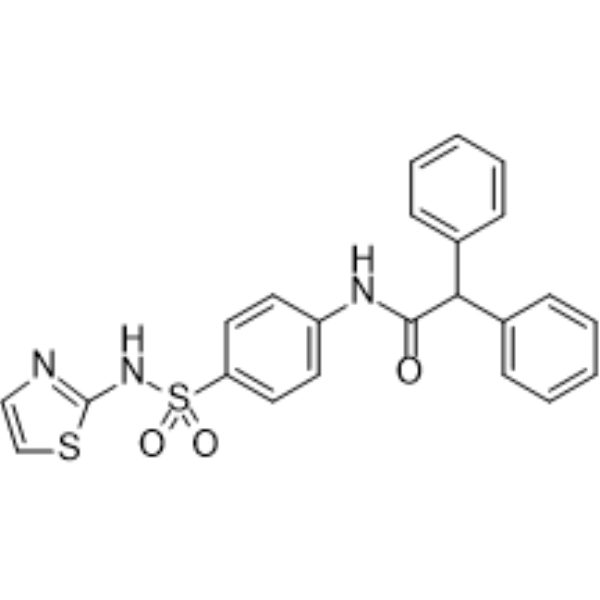 0 ImagesICA-121431 is a nanomolar potent and broad-spectrum voltage-gated sodium channel (Nav) blocker, shows equipotent selectivity for human Nav1.1 and Nav1.3 subtypes with IC50 values of 13 nM and 23 nM, respectively. ICA-121431 shows less potent inhibition of Nav1.2 (IC50=240 nM) and 1,000 fold selectivity against Nav1.4, Nav1.6, and the TTX-resistant human Nav1.5 and Nav1.8 channels (IC50s >10 μM).
-
PF-06456384 trihydrochloride
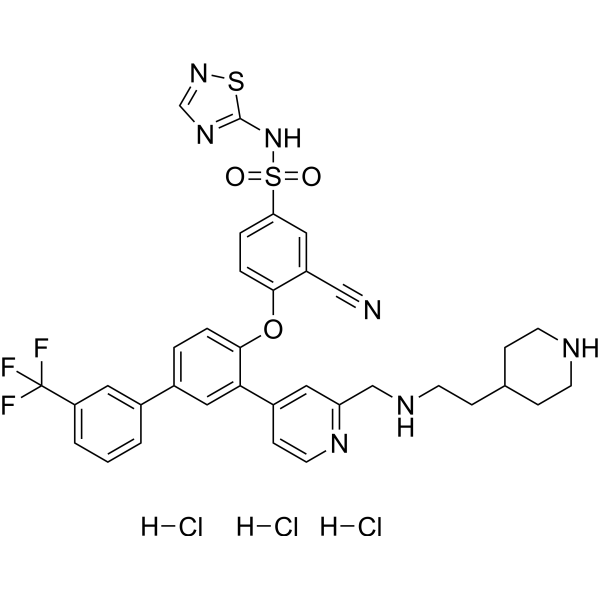 0 ImagesPF-06456384 trihydrochloride is an extremely potent and selective Nav1.7 sodium channel blocker (IC50: 0.01 nM for hNaV1.7; 75 nM for rNaV1.7; <0.1 nM for mNaV1.7). PF-06456384 trihydrochloride shows no significant analgesic efficacy in the mouse Formalin pain model.
-
TC-N 1752
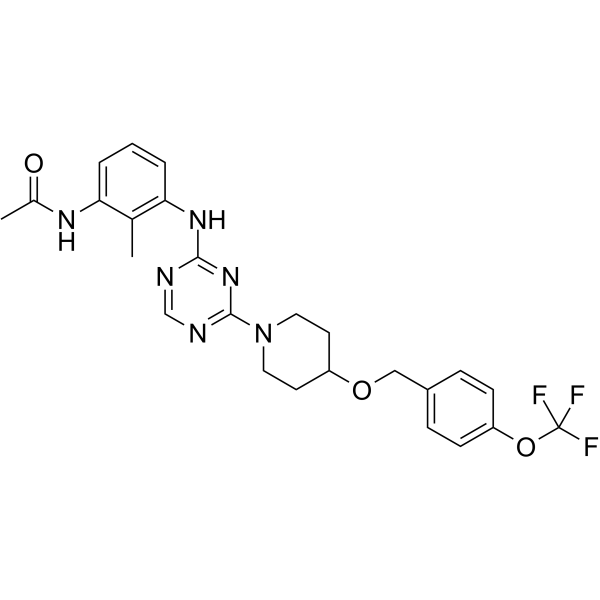 0 ImagesTC-N 1752 is a potent and orally active inhibitor of Nav1.7, with IC50s of 0.17 μM, 0.3 μM, 0.4 μM, 1.1 μM and 2.2 μM at hNav1.7, hNav1.3, hNav1.4, hNaV1.5 and rNav1.8, respectively. TC-N 1752 also inhibits tetrodotoxin-sensitive sodium channels. TC-N 1752 shows analgesic efficacy in the Formalin model of pain.
-
GDC-0310
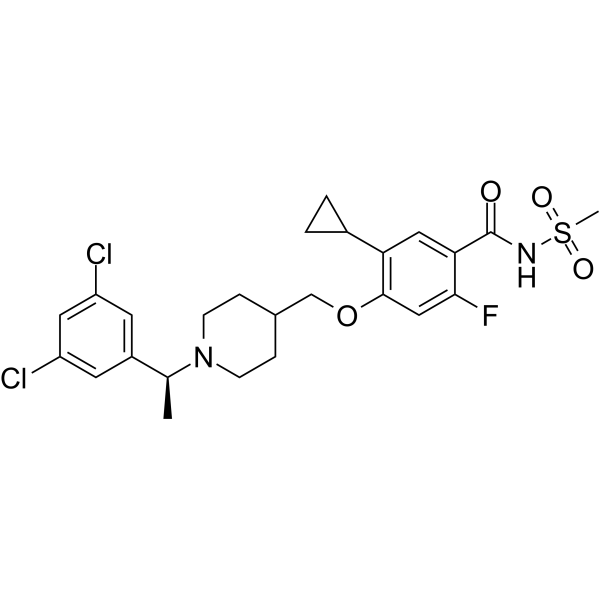 0 ImagesGDC-0310 is a selective acyl-sulfonamide Nav1.7 inhibitor, with an IC50 of 0.6 nM for hNav1.7.
-
Methocarbamol
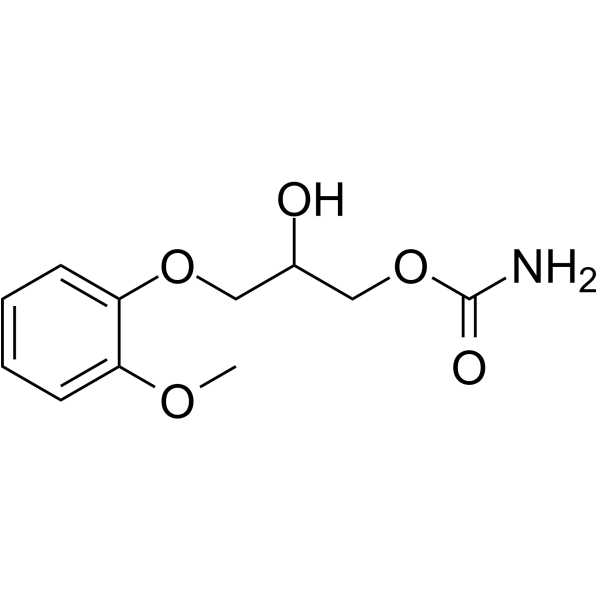 0 ImagesMethocarbamol is an orally active central muscle relaxant and blocks muscular Nav1.4 channel. Methocarbamol reversibly affects voltage dependence of inactivation of Nav1.4 channel. Methocarbamol has the potential for muscle spasms and pain syndromes research.
-
Huwentoxin-IV TFA
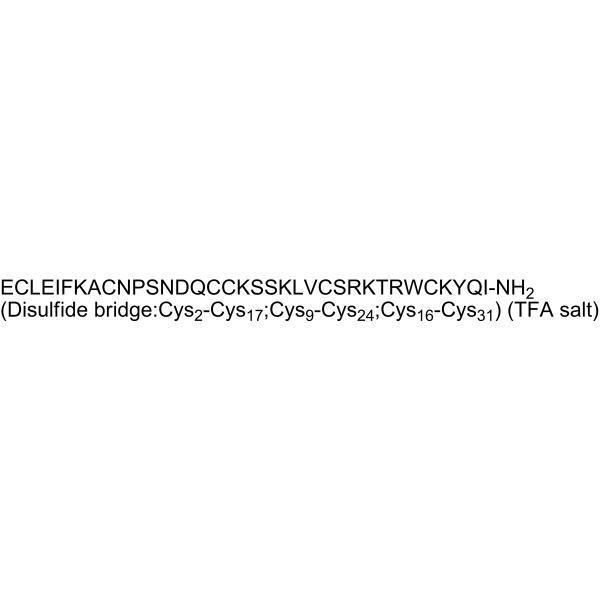 0 ImagesCat. No.: HY-P1220APurity: 99.18%Huwentoxin-IV TFA is a potent and selective sodium channel blocker, inhibits neuronal Nav1.7, Nav1.2, Nav1.3 and Nav1.4 with IC50s of 26, 150, 338 and 400 nM, respectively. Huwentoxin-IV TFA preferentially blocks peripheral nerve subtype Nav1.7 by binding neurotoxin receptor site 4. Huwentoxin-IV TFA has analgesic effects on animal models of inflammatory and neuropathic pain.
-
GpTx-1 TFA
 0 ImagesCat. No.: HY-P1681APurity: 99.56%GpTx-1 TFA is a peptide-based NaV1.7 sodium channel antagonist isolated from the venom of the Chilean spider Grammostola porter. GpTx-1 TFA demonstrates potent inhibitory activity against the NaV1.7 channel with an IC50 value of 10 nM, while exhibiting excellent selectivity for NaV1.4 (IC50 = 0.301 μM) and NaV1.5 (IC50 = 4.20 μM), showing >20-fold and >950-fold selectivity respectively.
-
Phrixotoxin 3
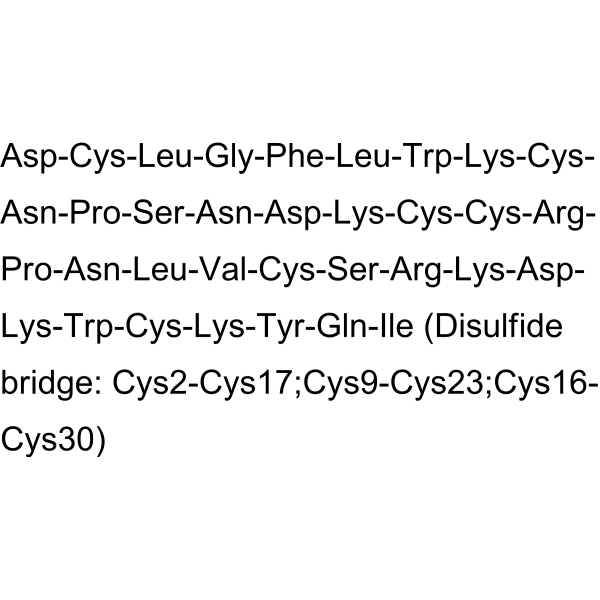 0 ImagesCat. No.: HY-P1218CAS No.: 880886-00-0Phrixotoxin 3 is a potent blocker of voltage-gated sodium channels, with IC50s of 0.6, 42, 72, 288, 610 nM for NaV1.2, NaV1.3, NaV1.4, NaV1.1 and NaV1.5, respectively. Phrixotoxin 3 modulates voltage-gated sodium channels with properties similar to those of typical gating-modifier toxins, both by causing a depolarizing shift in gating kinetics and by blocking the inward component of the sodium current.
-
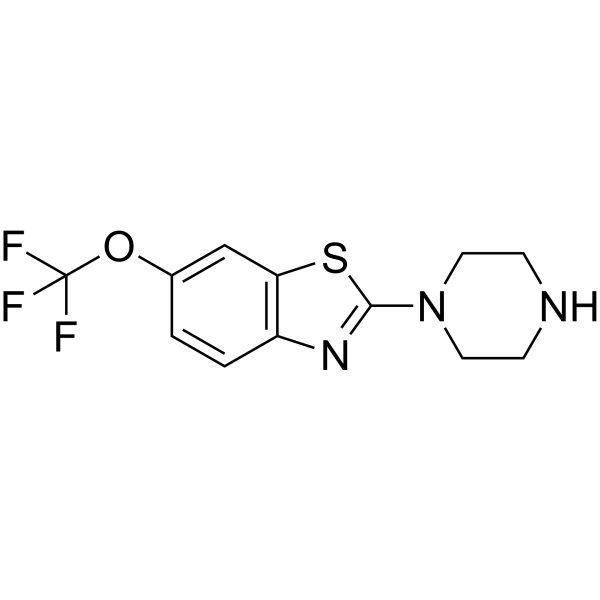
hERG-IN-3
 0 ImagesCat. No.: HY-175289hERG-IN-3 is an orally active hERG blocker with an IC50 of 44.5 nM. hERG-IN-3 exhibits a Ki for β2-adrenergic receptor of 14 nM. hERG-IN-3 exhibits the skeletal muscle Nav1.4 and sodium channel-blocking activities (IC50 = 4.4 μM, 3-fold increasement than hNav1.5). hERG-IN-3 displays a potent antimyotonic activity in an animal model. hERG-IN-3 can be used for the study of Myotonia Congenita.
-
GpTx-1
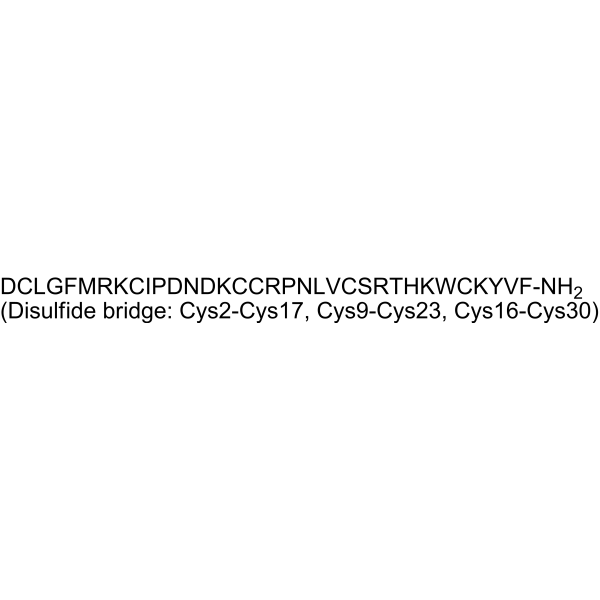 0 ImagesCat. No.: HY-P1681CAS No.: 1661050-12-9GpTx-1 is a peptide-based NaV1.7 sodium channel antagonist isolated from the venom of the Chilean spider Grammostola porter. GpTx-1 demonstrates potent inhibitory activity against the NaV1.7 channel with an IC50 value of 10 nM, while exhibiting excellent selectivity for NaV1.4 (IC50 = 0.301 μM) and NaV1.5 (IC50 = 4.20 μM), showing >20-fold and >950-fold selectivity respectively.
-
Huwentoxin-IV
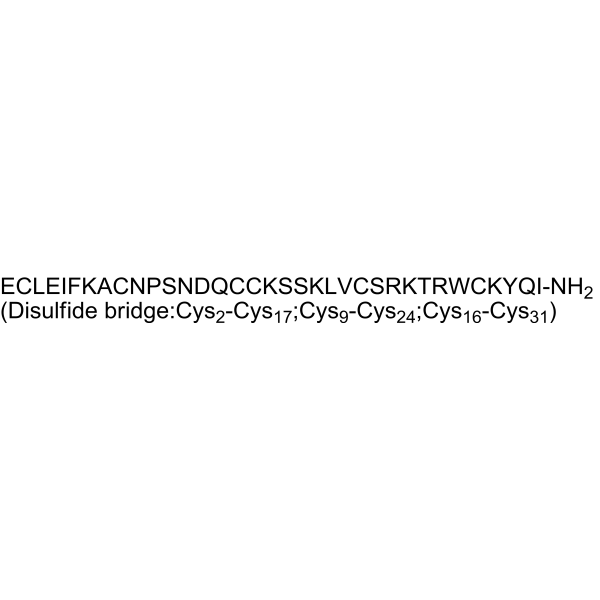 0 ImagesCat. No.: HY-P1220CAS No.: 526224-73-7Huwentoxin-IV is a potent and selective sodium channel blocker, inhibits neuronal Nav1.7, Nav1.2, Nav1.3 and Nav1.4 with IC50s of 26, 150, 338 and 400 nM, respectively. Huwentoxin-IV preferentially blocks peripheral nerve subtype Nav1.7 by binding neurotoxin receptor site 4. Huwentoxin-IV has analgesic effects on animal models of inflammatory and neuropathic pain.
-
Ceratotoxin-1
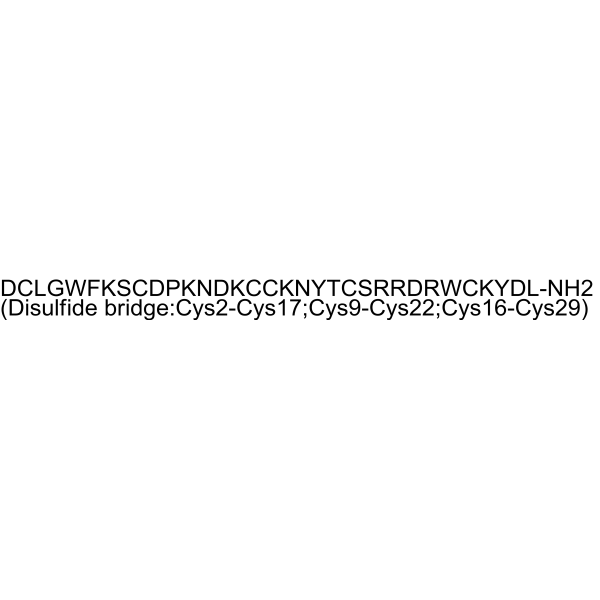 0 ImagesCat. No.: HY-P5811Synonyms: CcoTx1; β-TRTX-cm1aCeratotoxin-1 (CcoTx1), a peptide toxin, is an voltage-gated sodium channel subtypes inhibitor. Ceratotoxin-1 inhibits Nav1.1/β1, Nav1.2/β1, Nav1.4/β1, and Nav1.5/β1 with IC50 of 523 nM, 3 nM, 888 nM, and 323 nM, respectively. Ceratotoxin-1 also inhibits Nav1.8/β1.
-
Methocarbamol-d5
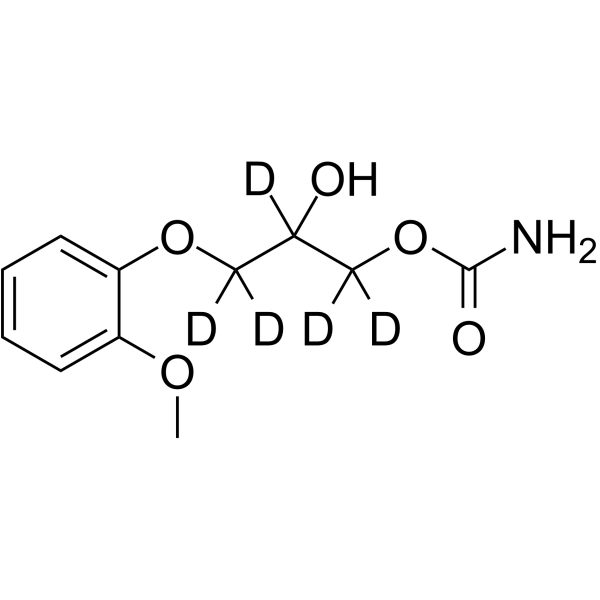 0 ImagesCat. No.: HY-B0262SCAS No.: 1189699-70-4Methocarbamol-d5 is deuterium labeled Methocarbamol. Methocarbamol is an orally active central muscle relaxant and blocks muscular Nav1.4 channel.
- 1



